

The print shop was already humming before sunrise. Sheets of glossy paper slid through massive presses while technicians leaned over color proofs, carefully adjusting tiny percentages on a digital screen. A slight change in cyan, barely noticeable to the naked eye, suddenly brought a magazine cover to life. The sky looked deeper, the ocean sharper, and the model’s dress carried a richness that wasn’t there moments earlier.
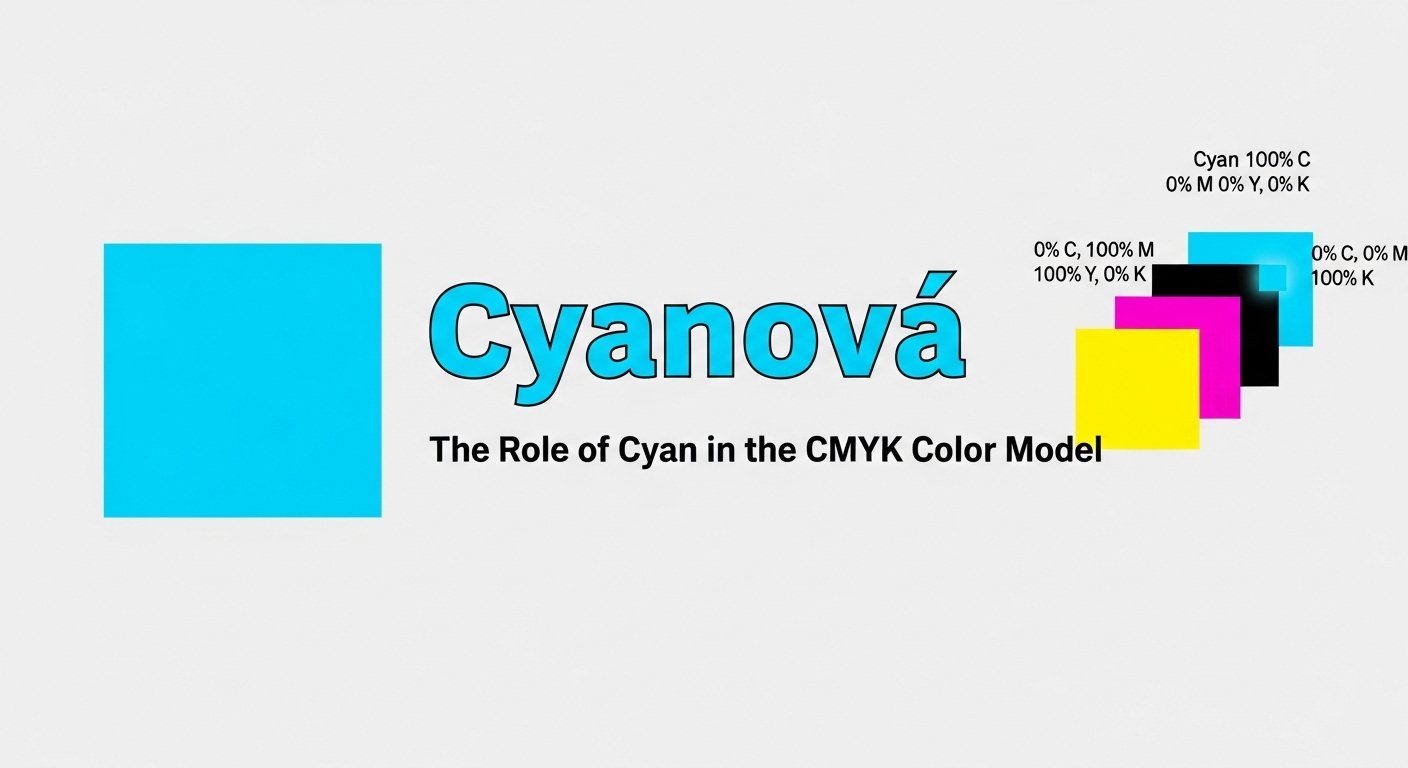
In the quiet language of color science, that subtle adjustment had a name often discussed among designers and print specialists: Cyanová. The term reflects the essential role of cyan within the CMYK color model, a system that has shaped printed media for decades. From glossy magazines to product packaging and corporate brochures, cyan is far more than just a shade of blue. It is one of the fundamental pillars that make accurate printing possible.
For entrepreneurs building brands, designers crafting visual identities, and technology leaders developing digital-to-print workflows, understanding how cyan operates inside the CMYK framework reveals a fascinating intersection of science, creativity, and precision.
Understanding the Foundation of CMYK
Before exploring the significance of Cyanová, it helps to understand the color system that made it indispensable. The CMYK model stands for Cyan, Magenta, Yellow, and Key (Black). Unlike the RGB model used for digital screens, CMYK is designed specifically for printing.
The reason lies in how colors interact with light and pigment. Screens emit light directly, combining red, green, and blue wavelengths to create color. Printed materials work differently. Ink absorbs certain wavelengths and reflects others, producing the colors we see on paper.
Cyan, magenta, and yellow form the primary subtractive colors. When combined in varying amounts, they can theoretically produce the full spectrum of visible colors. Black ink is added to improve depth and contrast while reducing excessive ink use.
Cyan occupies a particularly interesting place in this system. Positioned between blue and green on the color spectrum, it acts as a balancing force that helps create everything from cool ocean hues to subtle skin tones.
Cyanová as a Concept in Modern Printing
The term Cyanová often appears in design conversations as a way to emphasize cyan’s unique importance within the CMYK model. It represents more than the color itself. It reflects the technical and artistic discipline required to control cyan accurately in professional printing environments.
In practical terms, the concept highlights how small variations in cyan levels can dramatically change visual output. A slightly stronger cyan component can transform a dull landscape into a vivid one. Too little cyan, and an image may appear washed out or overly warm.
For technology professionals working in digital production pipelines, mastering this balance is essential. Color management systems, ICC profiles, and calibrated monitors all aim to ensure that what designers see on screen translates correctly to print.
Without careful control, cyan often becomes the first color to drift during printing, leading to inconsistent results.
Why Cyan Matters in Branding and Visual Identity
Businesses often underestimate how critical color consistency is to brand perception. A logo’s shade of blue might seem trivial, but consumers notice when it shifts across marketing materials.
Cyan plays a central role in maintaining that consistency, especially for brands that rely heavily on cool-toned palettes. Technology companies, financial institutions, and healthcare organizations frequently use blue-based color schemes because they communicate trust, stability, and clarity.
When printed materials fail to reproduce those colors accurately, the brand message weakens.
Cyanová therefore becomes a strategic concern for entrepreneurs and marketing teams. Accurate color reproduction ensures that packaging, advertisements, and corporate documents maintain visual coherence across every medium.
The Science Behind Cyan Pigments
Behind every printed image lies a complex chemical process. Cyan inks are formulated with pigments that absorb red wavelengths of light while reflecting blue and green.
This interaction produces the vibrant aqua-like hue we recognize as cyan.
Pigment chemistry has evolved significantly over the years. Early printing inks struggled with fading and inconsistent color reproduction. Modern formulations use synthetic pigments that provide greater stability and improved saturation.
These advances allow printers to achieve deeper blues and more vibrant greens without sacrificing durability.
For businesses producing large volumes of printed materials, these improvements translate into longer-lasting visuals and reduced production errors.
The Role of Cyan in Image Reproduction
Professional printing relies heavily on halftone techniques to recreate photographic images. Instead of printing continuous tones, presses produce tiny dots of each CMYK color.
When viewed from a normal distance, the human eye blends these dots into smooth gradients and complex hues.
Cyan often carries much of the visual weight in this process. Skies, water, shadows, and cool textures rely heavily on cyan dot patterns.
Because cyan dots frequently appear in larger areas of an image, even minor misalignments can become noticeable. Print technicians therefore pay special attention to cyan plates during press setup.
This precision is one reason why color proofing remains a critical step in professional publishing workflows.
A Closer Look at CMYK Color Interactions
The interaction between cyan and the other CMYK components reveals how complex printed color truly is. Each ink layer modifies the final result by absorbing specific wavelengths.
The following table illustrates how cyan interacts with other CMYK components to create various colors commonly seen in printed media.
| CMYK Combination | Resulting Color | Practical Use |
|---|---|---|
| Cyan + Magenta | Blue | Corporate branding, packaging |
| Cyan + Yellow | Green | Environmental graphics, product labels |
| Cyan + Magenta + Yellow | Dark brown or muted tones | Natural imagery, textures |
| Cyan + Black | Deep navy shades | Editorial design, typography accents |
| Low Cyan with High Yellow | Warm greens | Lifestyle photography |
This interplay explains why color correction in printing often focuses heavily on cyan adjustments. It affects multiple color families simultaneously.
Cyanová in the Age of Digital Workflows
Modern design environments rely on digital tools that simulate print colors before production begins. Software platforms allow designers to preview CMYK results while working in RGB environments.
However, simulation can only go so far. Screen colors often appear brighter because they emit light rather than reflecting it.
Cyan tends to be one of the colors most affected by this difference. On a digital display, cyan may look luminous and intense. On paper, the same value can appear more subdued.
This discrepancy explains why professional design studios invest in calibrated monitors and soft proofing systems. These tools attempt to mimic printed output as closely as possible.
Understanding Cyanová in this context means recognizing that color accuracy is not simply a design choice. It is a technological process involving hardware calibration, color profiles, and precise ink control.
Challenges in Maintaining Cyan Accuracy
Despite technological advances, cyan remains one of the trickiest colors to manage in printing. Environmental factors such as humidity, paper texture, and ink absorption can influence how it appears.
Even slight variations in paper stock can change the final tone.
Glossy paper tends to reflect more light, making cyan appear brighter. Matte surfaces absorb more ink, which can deepen or mute the color.
Print operators must therefore adjust ink densities based on the specific materials being used.
In large-scale print operations, maintaining consistency across thousands of pages becomes a sophisticated balancing act. Automated color management systems help monitor these variations, but human expertise still plays a crucial role.
The Business Implications of Color Precision
For founders and product teams, color precision may sound like a technical detail. In reality, it has direct business consequences.
Packaging colors influence purchasing decisions. Marketing materials affect brand recognition. Even slight color inconsistencies can undermine consumer trust.
Luxury brands, in particular, rely heavily on precise color reproduction. A premium cosmetic brand cannot afford packaging that appears slightly different from batch to batch.
In this context, the concept of Cyanová becomes more than a design conversation. It becomes part of quality control and brand protection.
Companies investing in professional printing workflows often prioritize strict color standards for exactly this reason.
Cyan in Emerging Printing Technologies
Printing technology continues to evolve as digital production methods advance. Inkjet printing systems, for example, use micro-droplet technology to place incredibly precise amounts of cyan ink onto surfaces.
These systems can produce photographic-quality prints with smoother gradients than traditional offset presses.
At the same time, expanded color models are emerging. Some printers now include additional inks such as light cyan and light magenta. These extra colors improve tonal transitions and reduce visible dot patterns.
For creative professionals, these innovations open new possibilities for image fidelity and color depth.
Yet even as technology changes, cyan remains at the heart of the process.
The Cultural and Aesthetic Influence of Cyan
Beyond its technical role, cyan has developed a cultural identity in visual design. It is often associated with innovation, clarity, and modernity.
Technology companies frequently incorporate cyan tones into their branding because the color suggests transparency and forward thinking.
In editorial design, cyan accents can introduce a sense of freshness and energy. Designers often use it to balance warmer tones or highlight key elements in layouts.
This dual role, both technical and aesthetic, reinforces why the study of Cyanová continues to matter in modern creative industries.
Looking Ahead: The Future of Cyan in Print
As digital media continues to dominate communication channels, some observers have predicted the decline of traditional printing. Yet the reality has proven more nuanced.
Print remains essential for packaging, publishing, and marketing materials. In many cases, physical media carries a sense of permanence and credibility that digital platforms struggle to match.
Color accuracy will therefore remain a priority.
Advances in color science, pigment chemistry, and automated calibration systems will continue improving how cyan behaves within the CMYK framework. These improvements promise more consistent results and broader creative possibilities.
For entrepreneurs launching new brands and technology leaders managing complex production pipelines, understanding these developments will remain an important competitive advantage.
Conclusion
The story that began in a busy print shop reveals a deeper truth about modern communication. Colors are not simply aesthetic choices. They are carefully engineered outcomes shaped by chemistry, physics, and technology.
Within that intricate system, cyan plays a defining role. The idea of Cyanová captures this importance by highlighting the delicate balance required to reproduce color accurately in print.
From brand identity to magazine photography, cyan quietly influences how audiences perceive visual information. Designers rely on it to build harmony, printers depend on it for technical precision, and businesses benefit from the consistency it brings to their visual messaging.
As printing technology continues to evolve, cyan will remain a cornerstone of the CMYK model. Its presence may often go unnoticed by readers and consumers, yet it continues to shape the images and materials that define modern visual culture.